
NorthStar
Product design
A more considered way to move between the cities that shape a life.
NorthStar is a future-rail concept that asks a simple question: what if an intercity journey felt as intentional as the destination?
It started as a 21-day personal project and grew into a whole service: two kinds of trains, a booking assistant, a loyalty program, and a plan for paying for the tracks.
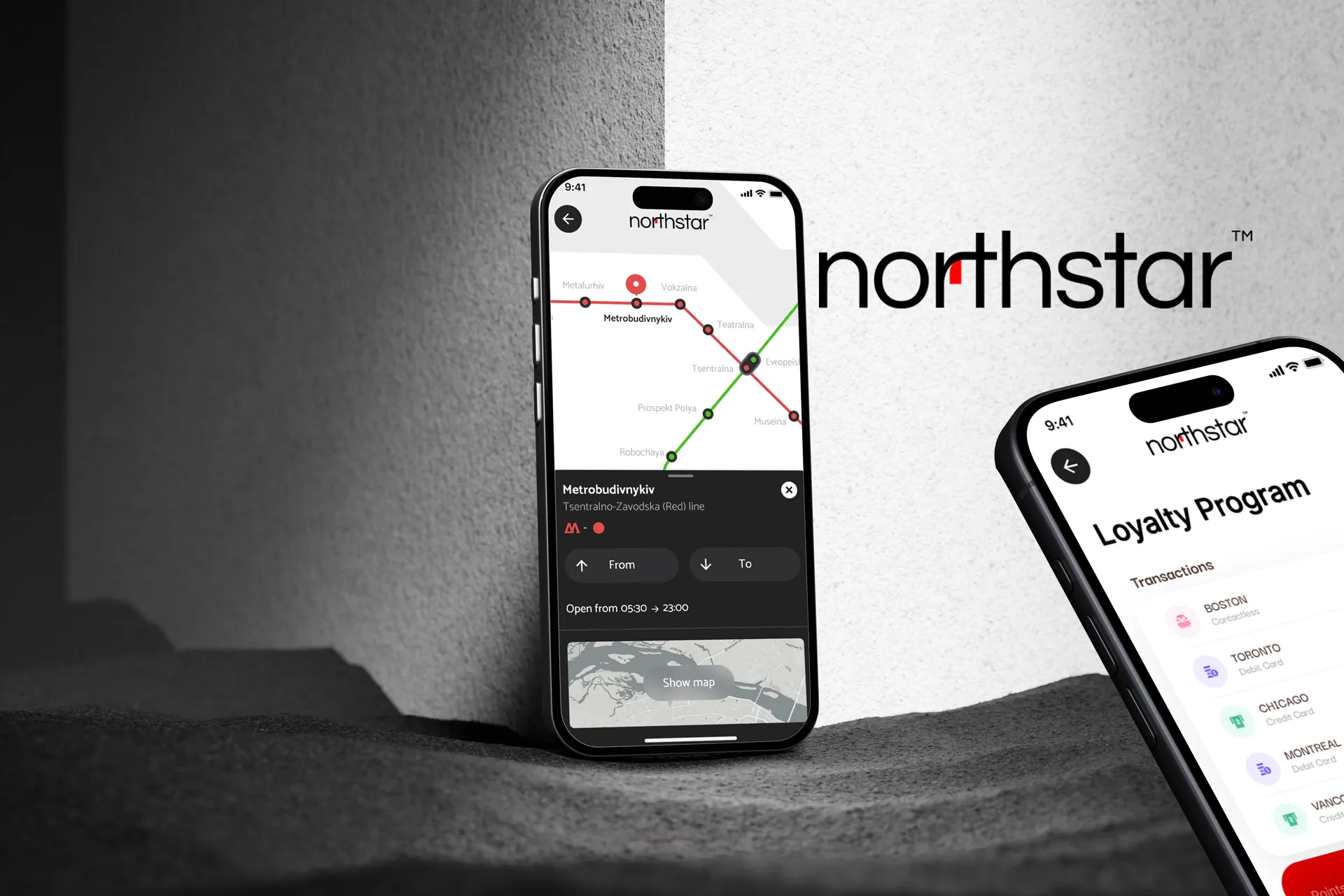
The starting point
Too far to drive. Too close to fly. Too important to feel like an afterthought.
The Windsor to Québec corridor connects cities with a huge amount of cultural, economic, and personal exchange. Yet moving through it can still feel fragmented and designed around schedules rather than people.
NorthStar explores rail as a connected service: one that helps someone choose, prepare, travel, and arrive with more confidence and less friction.
- people live along the Windsor–Québec and US Northeast corridors
- 68M+
- short-haul flights between those cities every day
- 600+
The service
Two trains, one network.
NorthStar Express runs fast between the big cities. Star Connector is the local service, linking smaller communities without giving up speed or comfort.
Together they’d connect more than 70 million people across 5,000 km of new track, running on clean energy with smart infrastructure underneath.
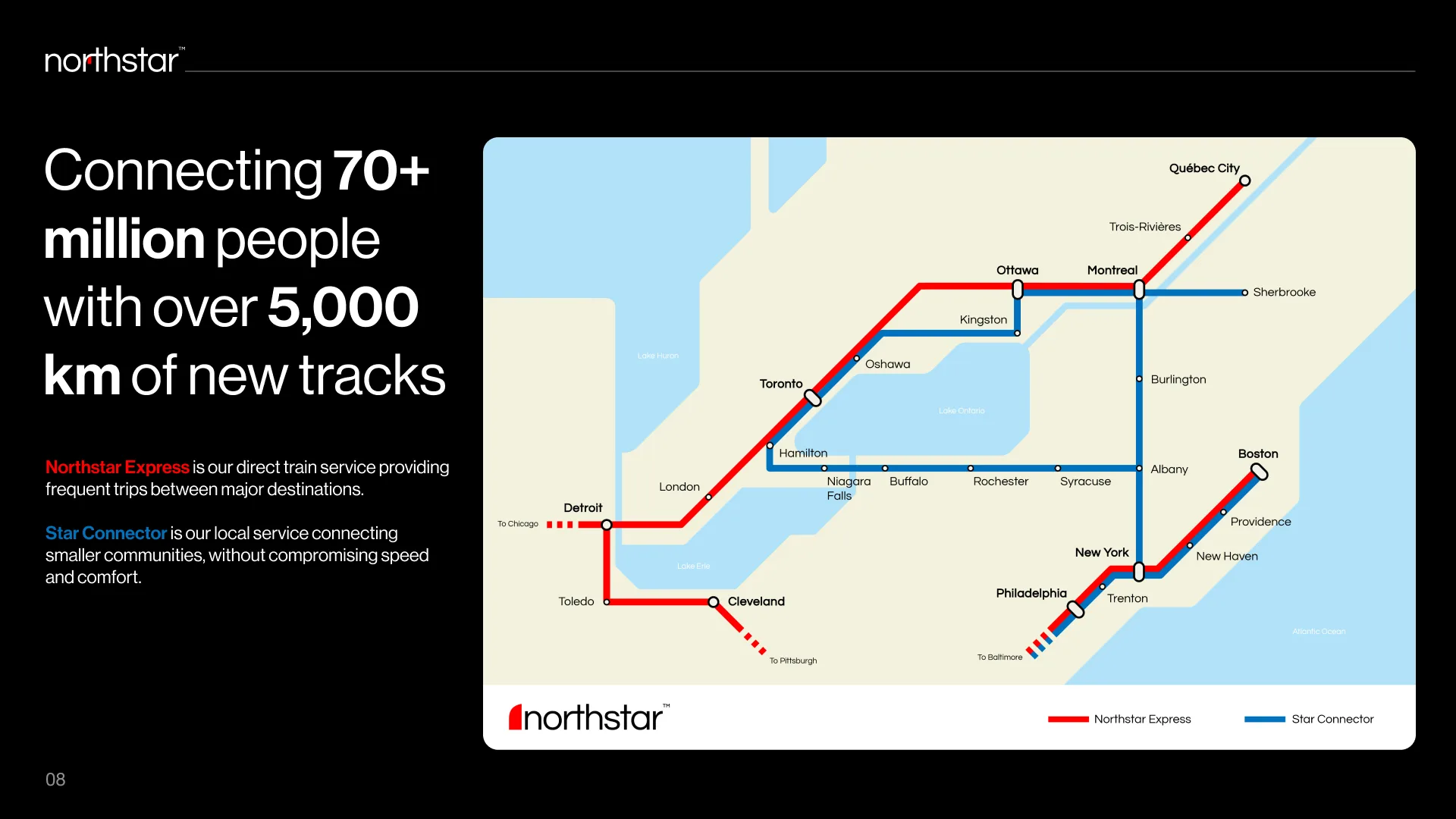
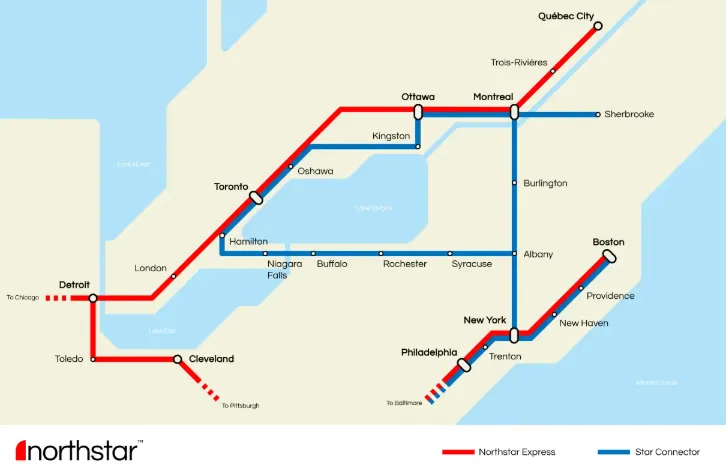
The route
The journey is more than the line between two cities.
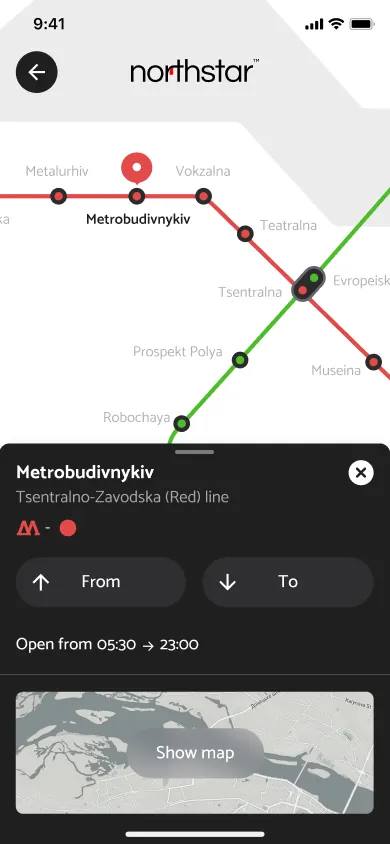
The route view gives the concept a physical centre of gravity, connecting places, time, and the experience in between.
Who it’s for
Five kinds of travellers, five reasons to take the train.
- 01
Urban commuters. People who already ride transit every day, and want the intercity leg to feel just as easy.
- 02
Business travellers. Fast, reliable city-to-city connections, with time to work on the way.
- 03
Air travellers. Rapid rail links to and from the airport, instead of another drive.
- 04
Tourists. Exploring one city, then the next, without renting a car.
- 05
Event goers. Conferences, concerts, and games, with the trip as part of the day out.
Questions on the route
Designing for a whole travel day, not just the booking.
- 01
Begin with the reason for the trip. The first interaction is not a timetable. It is a way to choose a journey around timing, energy, and intent.
- 02
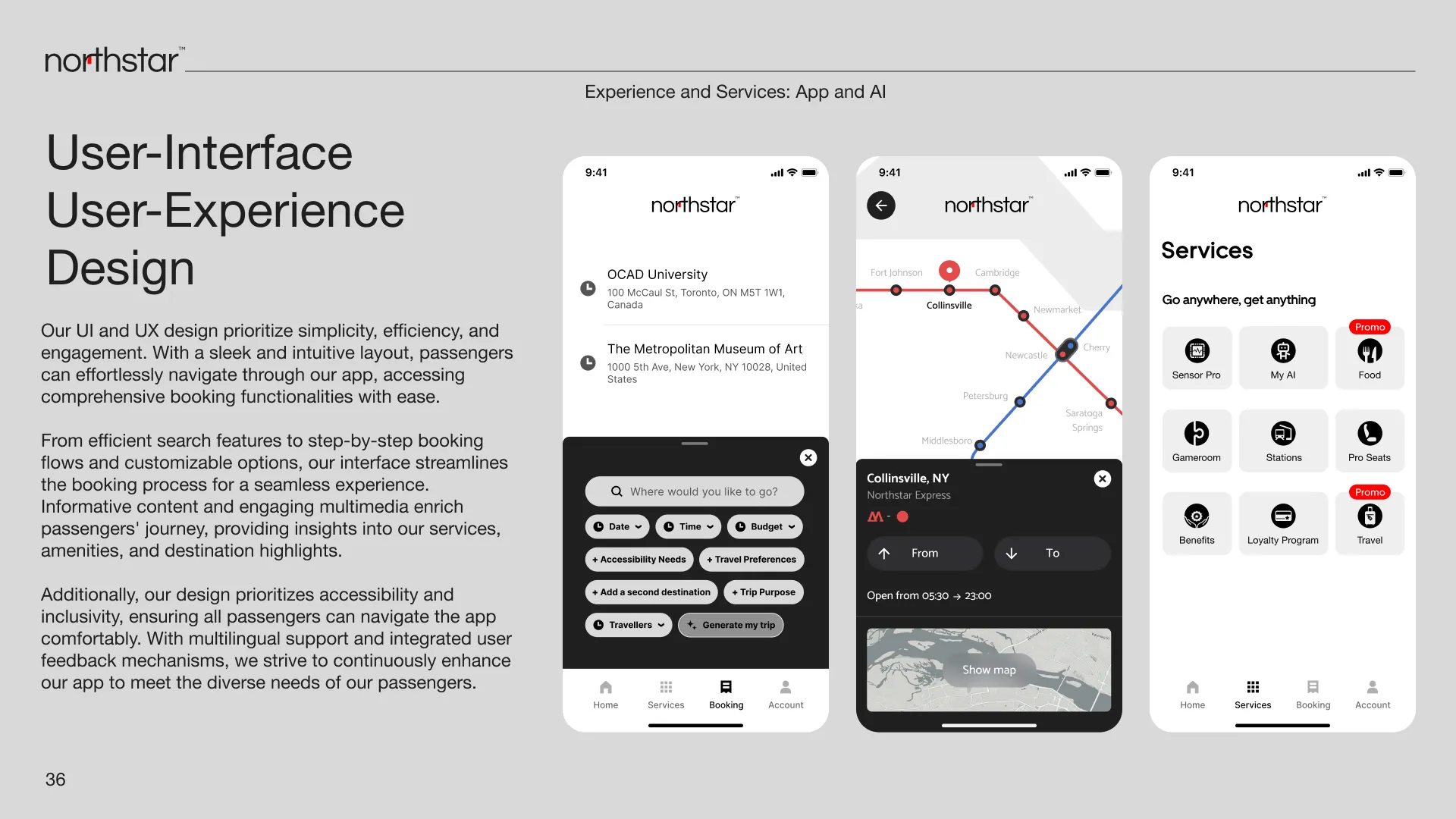
Let the route do some of the explaining. A calm, spatial view gives a traveller a sense of where they are before they arrive. Progress becomes part of the experience.
- 03
Carry one idea from booking to arrival. One visual language across planning, boarding, and travel, so the day feels connected instead of assembled from separate tools.
Smart booking
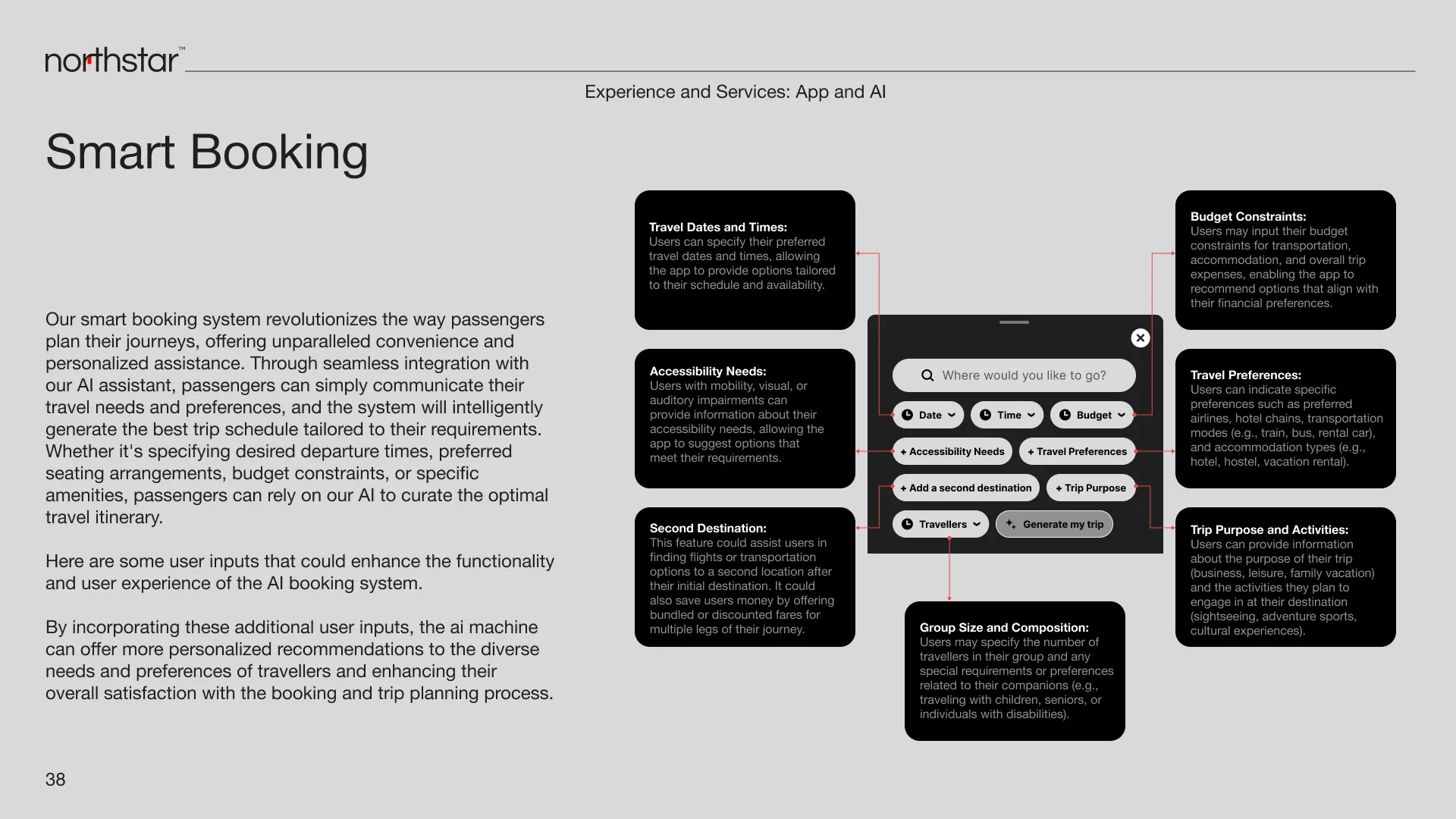
Tell it about the trip. It works out the schedule.
Booking starts with a conversation. You tell the assistant what you need, and it builds the best schedule around it. Departure times, seating, budget, and amenities stay right there to adjust.
- 01
Dates and times. When you want to leave or arrive, so the options fit your day.
- 02
Who’s coming. Group size and who’s in it: kids, seniors, someone with a disability.
- 03
Accessibility needs. Mobility, visual, or hearing needs, so the trip is planned around them from the start.
- 04
A second destination. Multi-leg trips in one booking, sometimes cheaper as a bundle.
- 05
Budget and purpose. What you can spend and why you’re going, so recommendations make sense for the trip.
Loyalty
Riding often should feel like it counts.
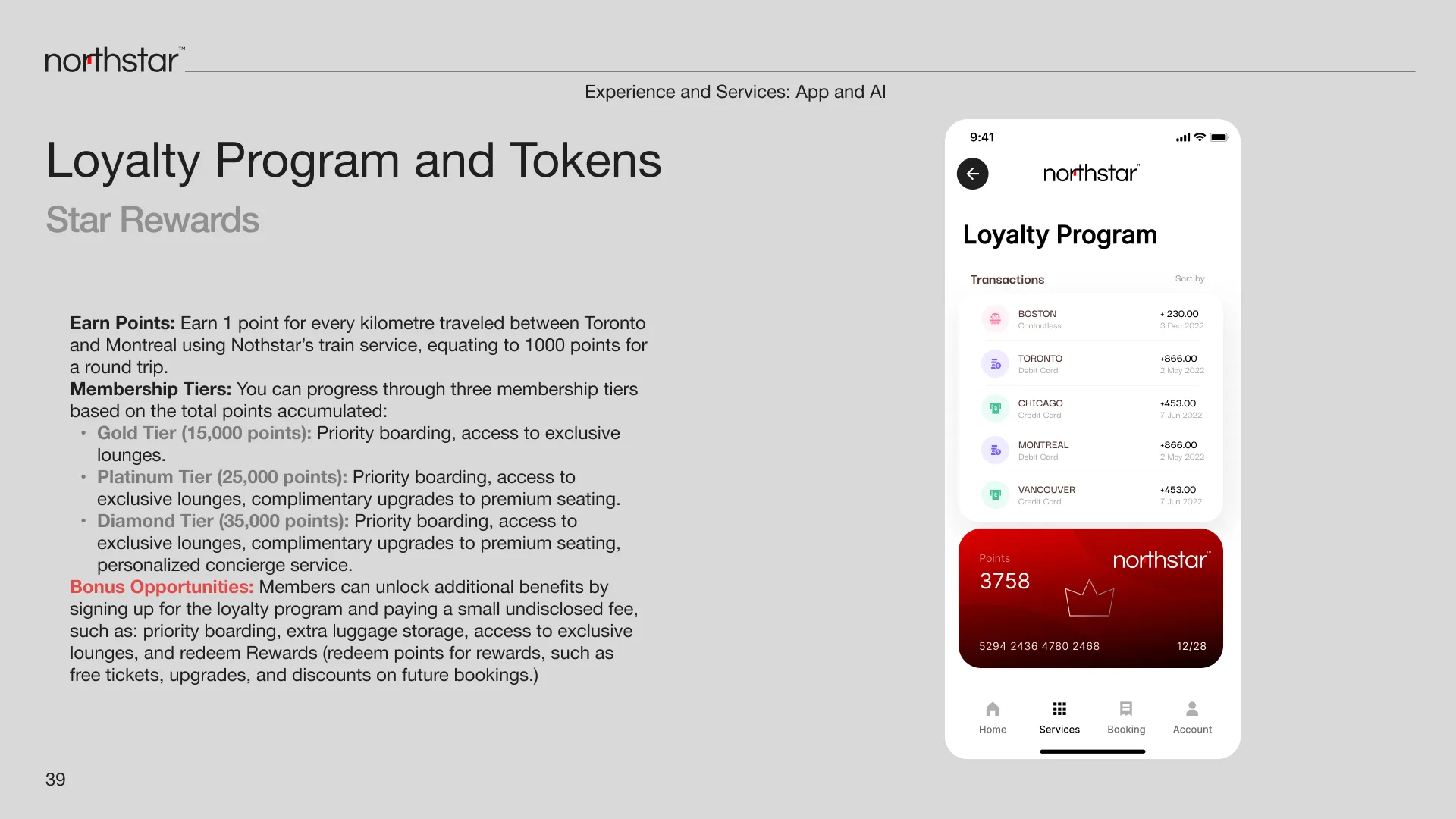
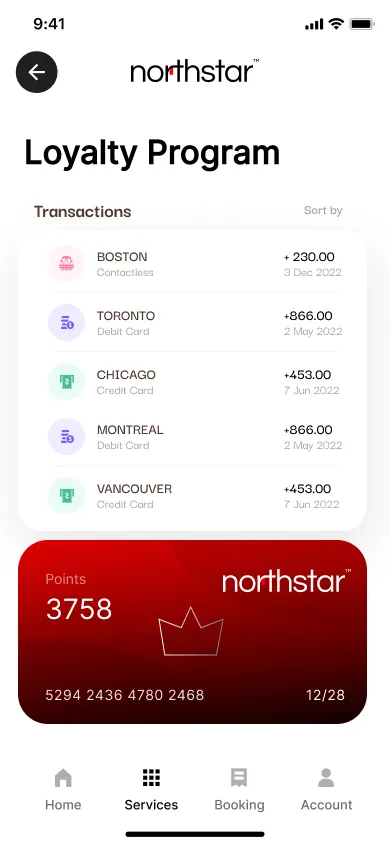
The loyalty program lives inside the app instead of in a separate card: points on every trip, tiers to climb, and benefits that make frequent travel easier.
- for every kilometre, about 1,000 for a Toronto–Montréal round trip
- 1 pt
- tiers: Gold, Platinum, and Diamond
- 3
- 01
Gold, at 15,000 points. Priority boarding and access to exclusive lounges.
- 02
Platinum, at 25,000. Adds complimentary upgrades to premium seating.
- 03
Diamond, at 35,000. Adds a personal concierge.
- 04
Spend them. Points turn into free tickets, upgrades, and discounts on future trips.
A system in motion
Calm enough for travel. Clear enough for the next decision.
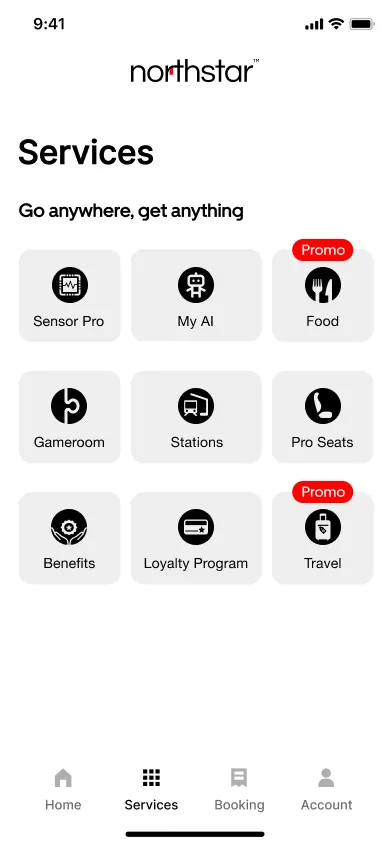
Deep blue creates a sense of containment. Signal red appears only when attention or motion needs a focal point.
Screens
Paying for it
No subsidies, so the stations pay for the tracks.
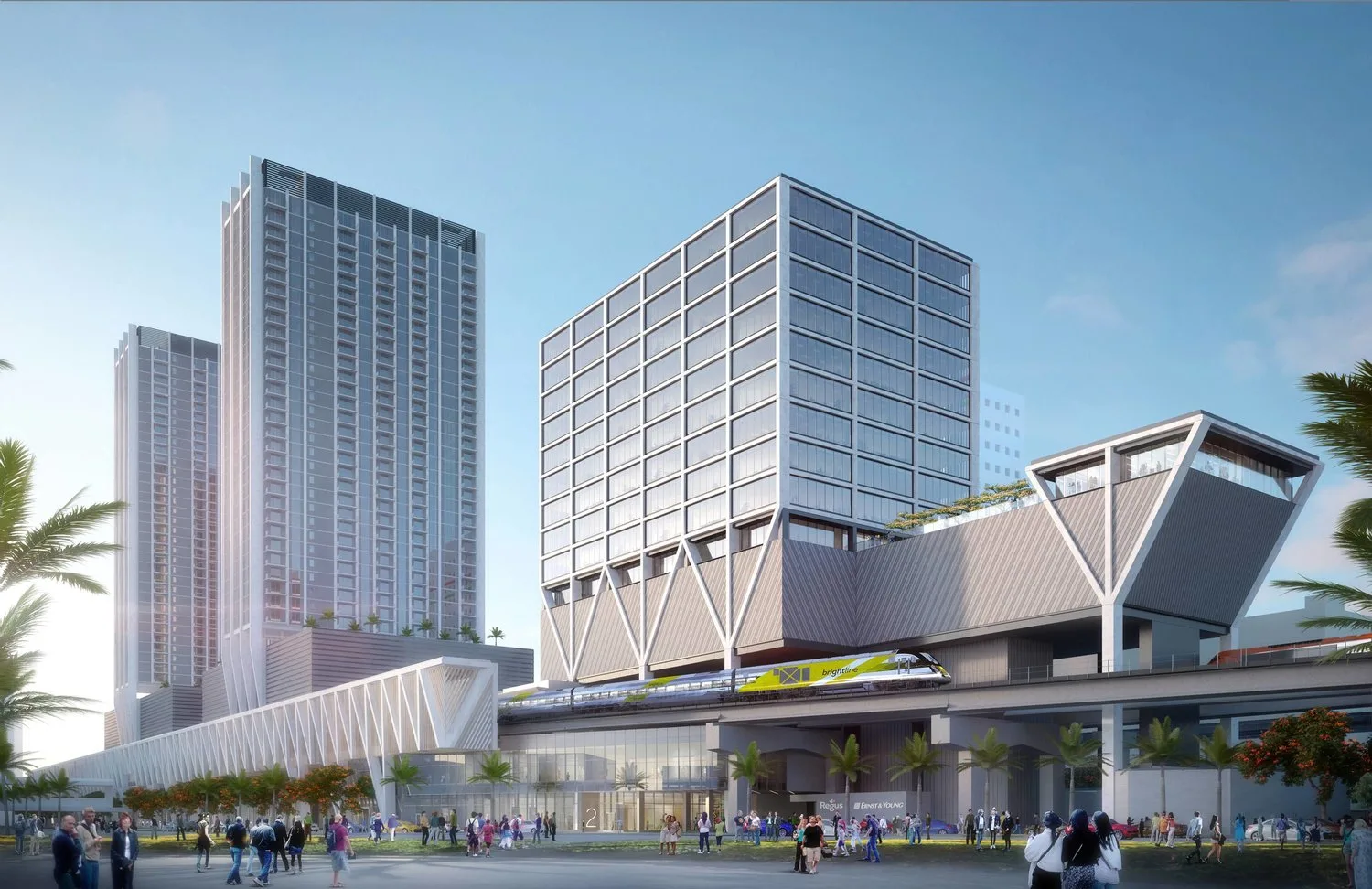
NorthStar is imagined as a private company. Construction is funded through real estate: land around each new station rises in value, and it’s sold to developers for transit-oriented development. Fares cover maintenance and staff.
The nice side effect is walkable neighbourhoods around every stop, instead of parking lots.
The film
A ride to enjoy.
A short film for the concept: what the trip could feel like from the inside.
My contribution
Making a future service feel coherent before it exists.
NorthStar was a chance to work across the service, not a single booking screen: establish the point of view, map the journey, and build an interface system that makes the concept feel internally consistent.
- 01
Experience framing Shaped the concept around the moments before, during, and after a trip.
- 02
Interaction design Designed the core flows, transitions, and information hierarchy in Figma.
- 03
System design Built a visual language that holds planning, travel, and arrival together.